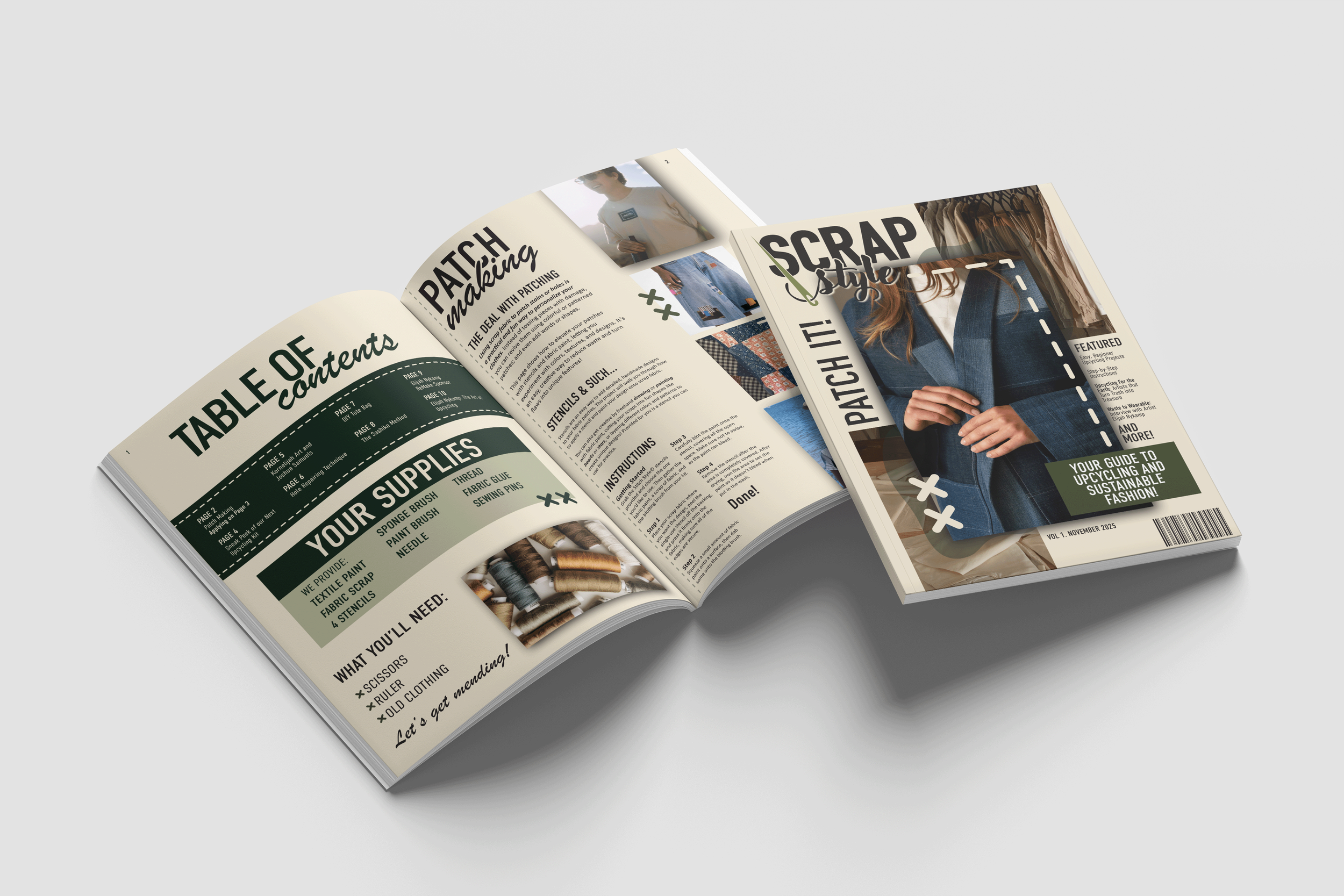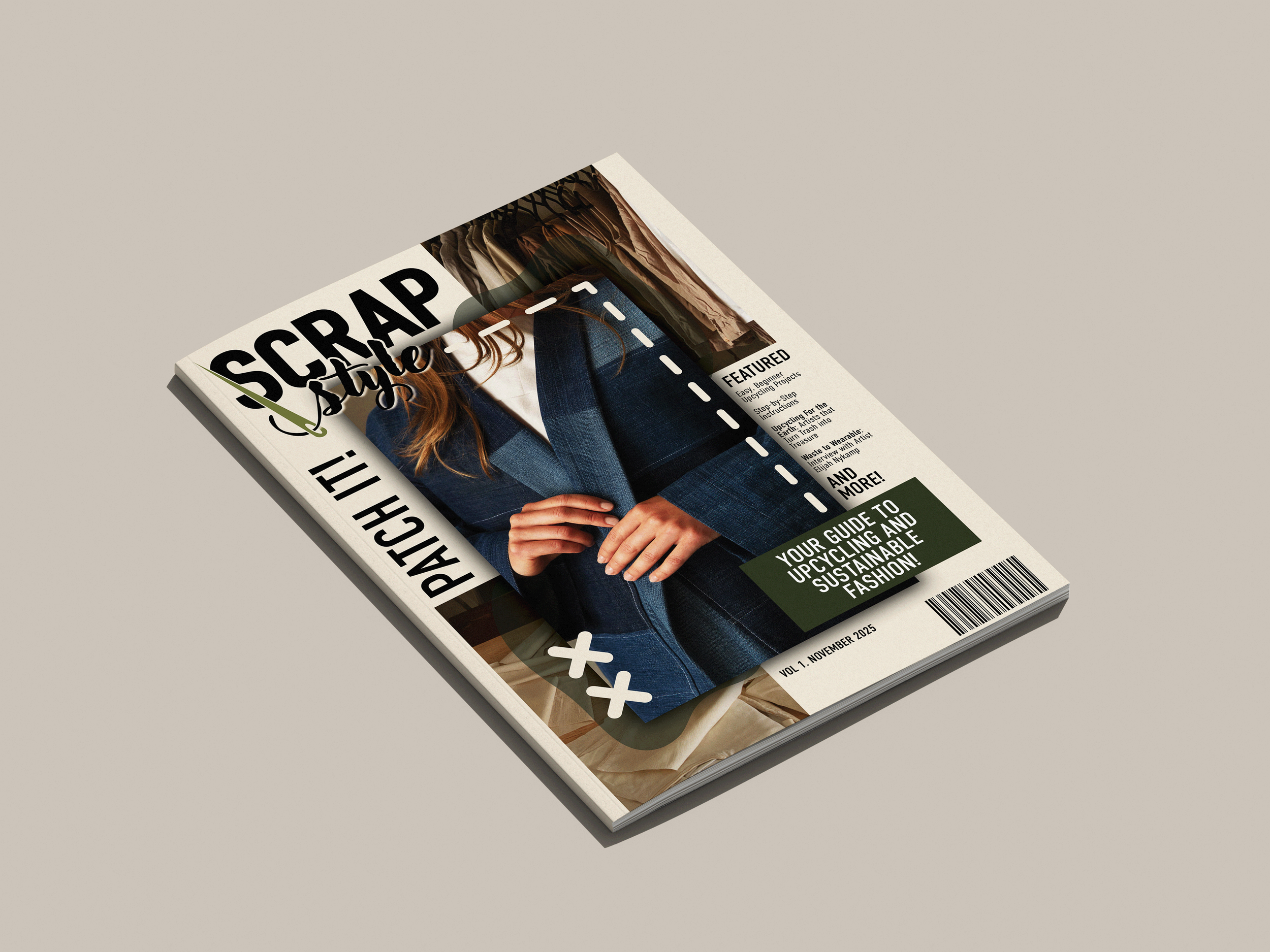
This was my thesis project, which involved extensive research, user feedback, and discussions with peers to better understand audience needs and how they can be used to design. What I came up with is a magazine designed for readers who want to extend the life of their clothing and reduce textile waste through accessible repair methods.
The magazine includes easy, step-by-step tutorials for mending and repairing garments, alongside articles on sustainable fashion, environmental and social issues, and inspiring ideas for personal projects. The project combines editorial design with usability-focused problem-solving to create a resource for sustainable living.
Throughout the process, I had to solve key UX and UI challenges, especially around organizing dense instructional content in a way that is clear and easy to follow. This led me to refine layout hierarchy, typography, and visual navigation to improve readability and guide the user experience more effectively.
Read more below to see my process!
Scrap Style
2025
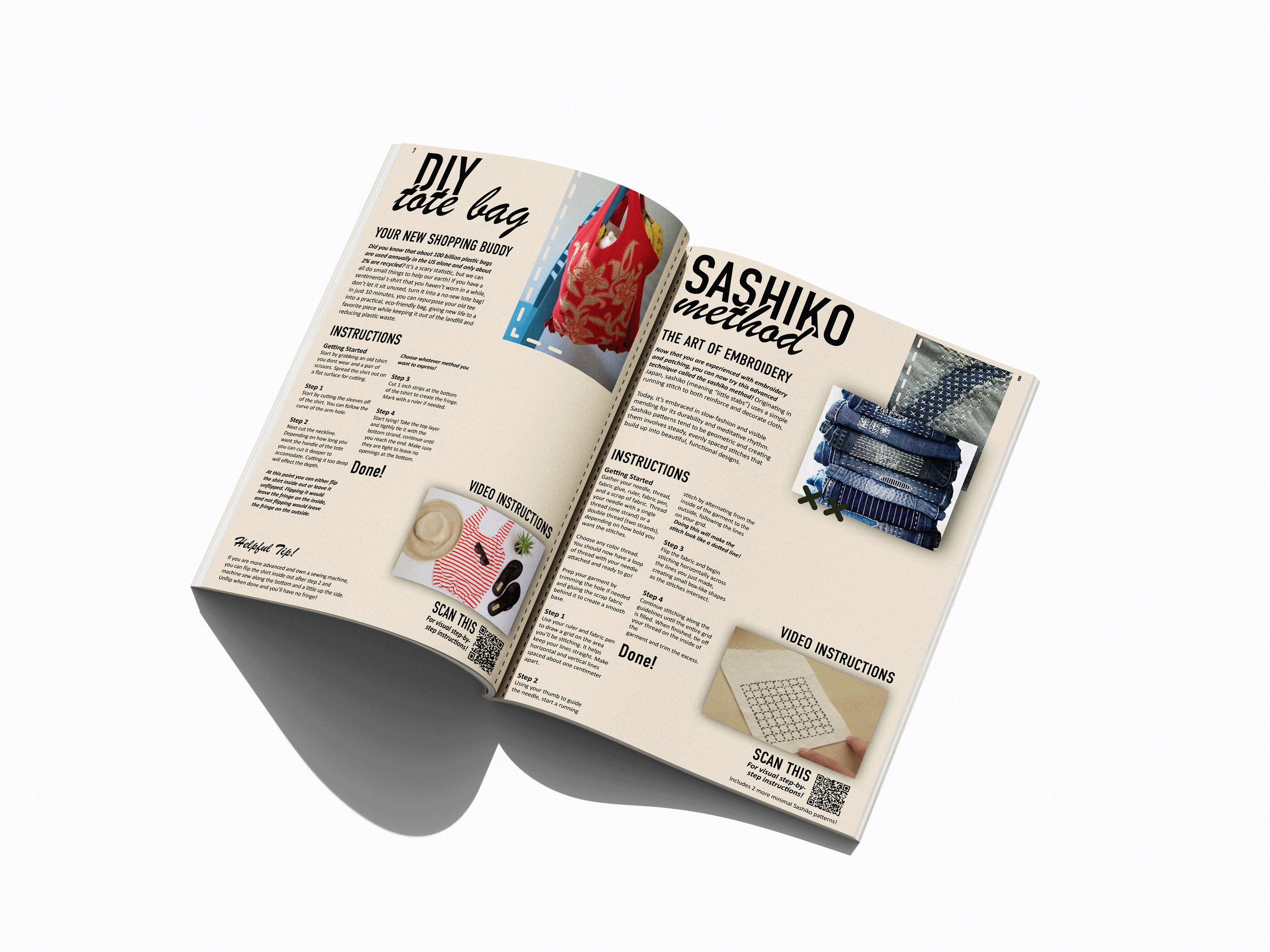
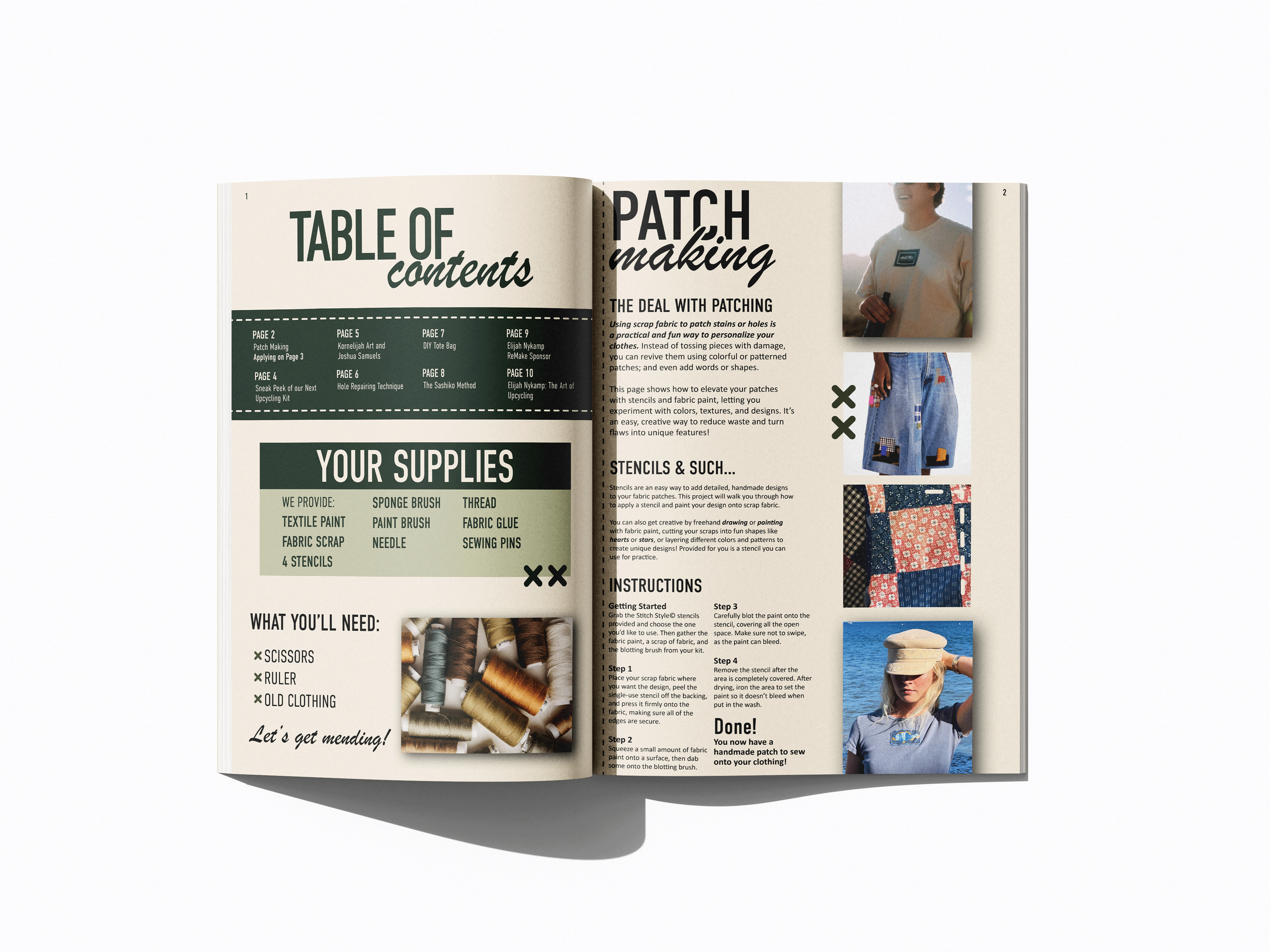
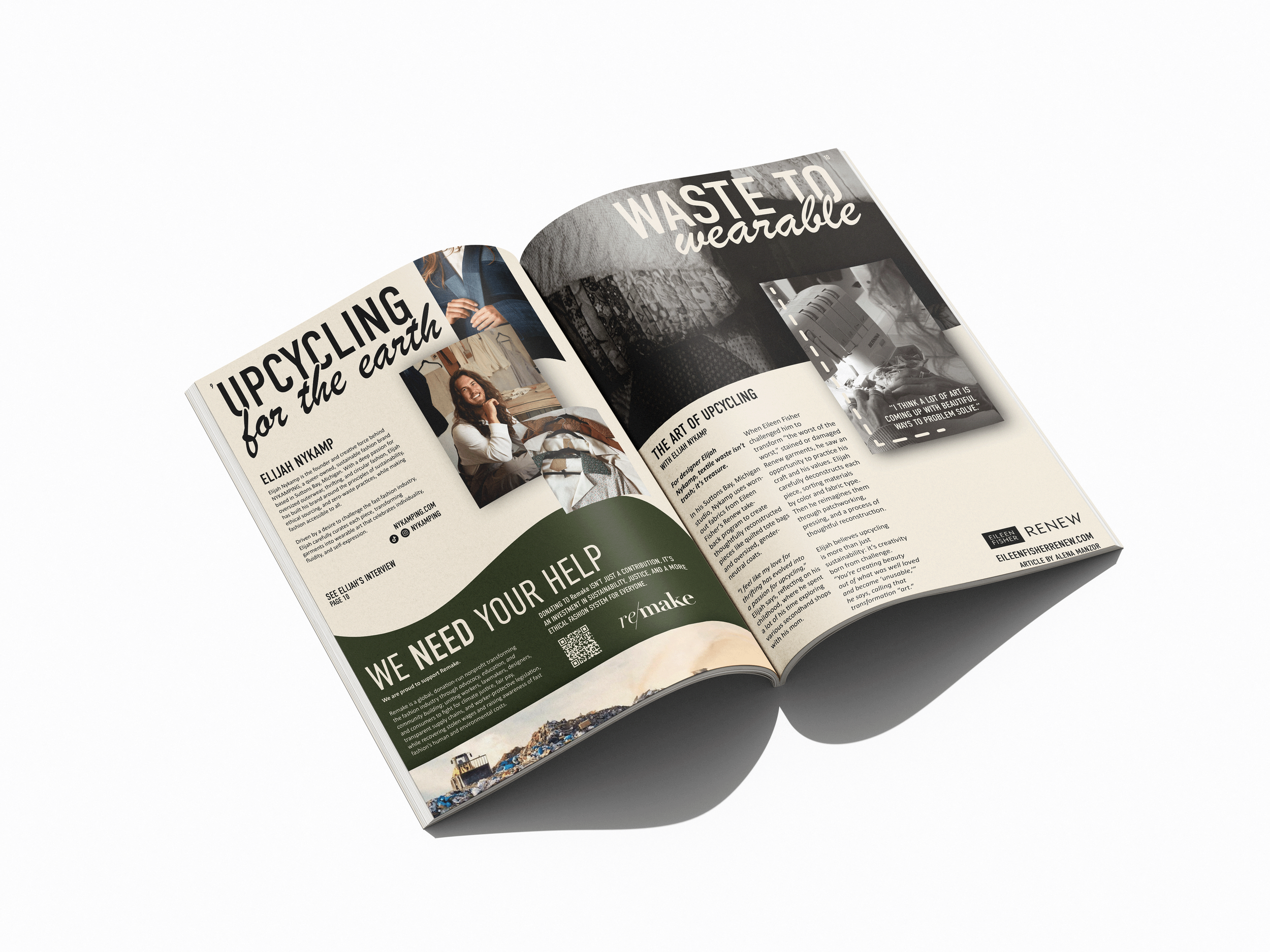
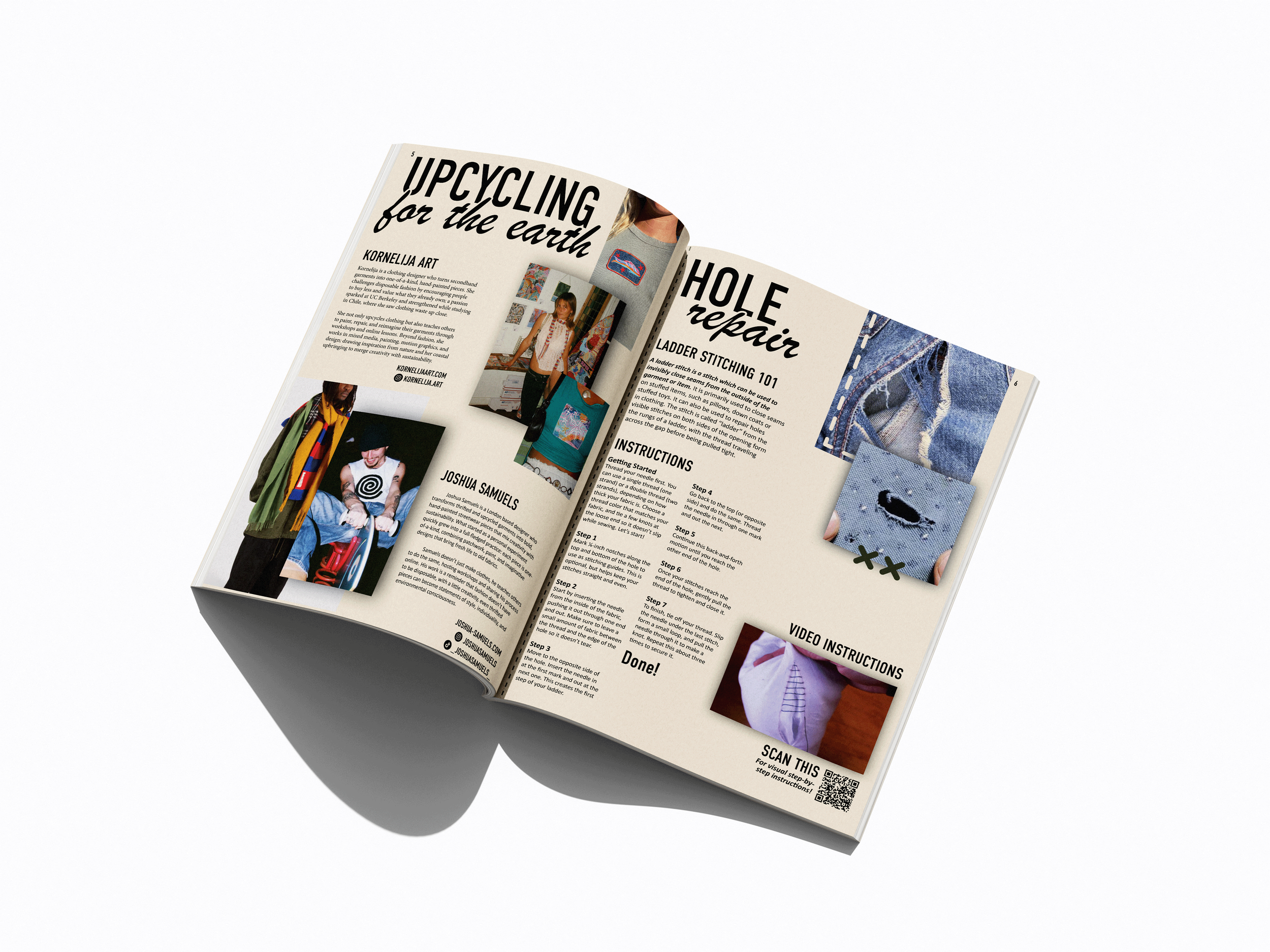
This project taught me not only UI design, but also UX design and the relationship between the two. This thesis helped me identify what worked visually versus what actually functioned well for the viewer. I had to make decisions based on readability, information flow, and how easily users could follow step-by-step content without confusion.
Research
-
The project began with a brainstorming phase where I explored several topics based on my personal interest, eventually narrowing my focus to the question, “Why do people throw away clothes so often?” From there, I conducted initial research into clothing waste and its broader environmental impact. I learned that fast fashion drives major pollution and carbon emissions, with much of its waste ending up in landfills instead of being reused.
I found that many people buy clothes without considering how they could be donated, upcycled, or repurposed, which helped shape the direction and purpose of my project.
-
I conducted an online survey of college students and other adults to explore clothing habits, sustainability awareness, and interest in repair and upcycling. Results showed mixed shopping patterns, with over half purchasing clothing every few months, while others shopped weekly or monthly. Key influences included affordability, material quality, and design, with many also relying on thrift stores, sales, and online shopping for accessible options.
In terms of sustainability, 42% of respondents expressed general interest, though attitudes toward upcycling and customization were mixed. Some were open to learning skills like sewing and mending to save money, while others were not interested due to lack of time, confidence, or preference for simplicity.
Findings show people value comfort, familiarity, affordability, accessibility, and durability, highlighting the need for simple, efficient solutions that make repair and reuse easier.
-
Based on this research, I created an upcycling magazine subscription to make sewing, mending, and sustainable fashion more accessible and engaging. Each monthly issue includes step-by-step tutorials, inspiration, and tips, along with materials like fabric scraps, tools, and project supplies.
It addresses common barriers by offering affordable, portable projects with clear instructions for all skill levels.
Each issue features five tutorials (Such as patching, repairs, a t-shirt tote, and Sashiko embroidery) and highlights three upcycling artists with interviews and inspiration.